How Much Can You Save Commuting by E-Bike in a Month? (Australia Cost Breakdown)
If you’re tired of watching your hard-earned Australian dollars vanish on train tickets, bus fares, or petrol fills, you’re far from alone. Commuting costs across Australia have been inching up year after year, leaving many of us asking: is there a cheaper way to get to work without giving up convenience? Cue the e-bike—an eco-friendly, efficient, and surprisingly budget-friendly solution that’s revolutionizing daily commutes in cities like Sydney, Melbourne, and Brisbane. Today, we’re breaking down exactly how much you can save by swapping your usual commute for an e-bike, complete with real numbers, practical comparisons, and a few hidden perks you might not have thought about.
First, let’s ground this in real data: per recent Australian Bureau of Statistics (ABS) figures, the average commute for drivers is roughly 16km one way (matching national average data), while public transport users typically travel around 12km each way. For the sake of this blog, we’ll stick to a realistic benchmark: a daily round-trip of 16km (8km each way) over 22 working days a month—a standard schedule for full-time employees. We’ll be pitting e-bike costs against the two most popular commuting choices in Australia: public transport (trains and buses) and driving a car. Spoiler alert: the savings could be enough to sway you to pick up that e-bike you’ve been considering.

First up, Let’s Calculate E-Bike Monthly Costs
The biggest misconception about e-bikes is that they’re “costly to run”—but the reality is, they’re cheaper than you’d imagine. Unlike cars, they don’t need petrol, insurance (optional, not required), or expensive servicing. The only ongoing expenses are electricity to charge the battery, plus a tiny amount for basic upkeep (think tyre top-ups or chain oil, which we’ll include in our calculations too).
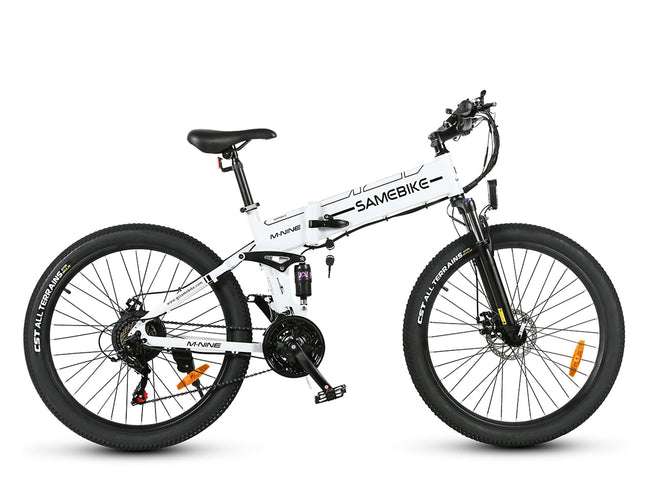
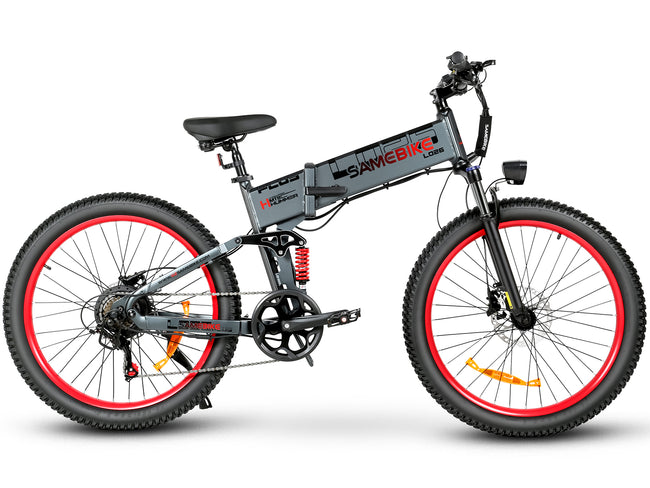
Let’s break down the monthly running costs for a typical e-bike—the most popular models in Australia, such as those powered by Bosch, Shimano, or local brands like Merida and Giant:
-
Charging Cost: A standard e-bike battery (500Wh) uses approximately 0.5kWh to fully charge. The average Australian residential electricity price in 2026 is around $0.39 AUD per kWh (excluding the upcoming free solar hours initiative), so a full charge costs roughly $0.195 AUD. If you commute 16km a day, you’ll probably need one full charge every 2–4 days (depending on terrain and how much assist you use, with Australia’s mild terrain often extending battery life). Over 22 working days, that’s about 7–9 charges, totaling $1.365–$1.755 AUD per month. Even with occasional peak electricity price spikes, the cost remains negligible compared to other commute options[6].
-
Basic Maintenance: Tyre inflation, chain lubricant, and occasional brake checks—let’s set aside $4 AUD per month (that’s a generous estimate; many months you won’t spend a penny, and annual average maintenance costs translate to roughly this monthly figure for typical e-bike use).
-
Total E-Bike Monthly Running Cost: $5.365–$5.755 AUD (rounded to $5.37–$5.76 AUD for simplicity).
Note: We’re not including the e-bike’s initial cost here (which ranges from $1,200–$4,000 AUD) because this blog focuses onmonthly savings—the ongoing costs you’ll pay each month. Over time, the initial investment more than pays for itself, but we’ll stick to the “per month” breakdown you requested.
Comparison 1: E-Bike vs. Public Transport (Australia Average)
Public transport is a popular choice for many Australian commuters, especially in major cities, but it’s far from cheap—with fares rising in 2026 in states like Victoria. Let’s use real fare data for a 16km round-trip commute (matching our e-bike example):
-
Sydney/Melbourne Commute: A 16km round-trip (for example, from Parramatta to Central Sydney, or Werribee to Central Melbourne) costs around $15–$18 AUD per day on trains or buses with a Opal Card (Sydney) or Myki Card (Melbourne, with 2026 Myki daily cap increased to $11.40 AUD for shorter trips, but rising to $15–$18 AUD for 16km round-trips). Over 22 days, that’s $330–$396 AUD per month. Brisbane fares are similar for equivalent distances, though short-term discounts may apply in some regions[12].
-
Regional City Commute (e.g., Adelaide to Glenelg, or Perth to Fremantle): A 16km round-trip bus or train fare is roughly $10–$13 AUD per day. For 22 days, that adds up to $220–$286 AUD per month.
Monthly Savings vs. Public Transport: - Sydney/Melbourne: $330–$396 AUD (public transport) – $5.37–$5.76 AUD (e-bike) = $324.24–$390.63 AUD - Regional Cities: $220–$286 AUD (public transport) – $5.37–$5.76 AUD (e-bike) = $214.24–$280.63 AUD
Comparison 2: E-Bike vs. Driving a Car
Driving is the most common commute choice in Australia (79% of Australians drive to work), but the hidden costs add up quickly—petrol, parking, insurance, registration, and maintenance. Let’s calculate the monthly commute-specific costs (we’ll exclude annual expenses like registration and full insurance, focusing only on what you spend to commute each month):
-
Petrol: A typical car gets around 10km per litre. For 16km per day (over 22 days), that’s 35.2 litres per month. With the average Australian petrol price in 2026 at $1.95 AUD per litre (aligned with global oil price trends), petrol costs $68.64 AUD per month. Prices may fluctuate slightly by quarter but remain in this range through 2026.
-
Parking: In city centres (e.g., Sydney CBD, Melbourne CBD, Brisbane CBD), daily parking near work costs $14–$25 AUD. Over 22 days, that’s $308–$550 AUD per month—with Brisbane having the highest short-term parking costs in the country, and Sydney leading in long-term daily parking fees. Even in smaller regional towns, parking is often $5–$8 AUD per day, totaling $110–$176 AUD per month.
-
Commute-Specific Maintenance: Wear and tear from daily driving (tyres, brakes, oil changes)—let’s budget $25 AUD per month (a conservative estimate, reflecting Australia’s longer average commute distances and road conditions).
-
Total Monthly Driving Commute Cost: $68.64 AUD + $308–$550 AUD + $25 AUD = $401.64–$643.64 AUD (major city centres); $68.64 AUD + $110–$176 AUD + $25 AUD = $203.64–$269.64 AUD (regional towns).
Monthly Savings vs. Driving: - Major City Centres: $401.64–$643.64 AUD (driving) – $5.37–$5.76 AUD (e-bike) = $396.28–$637.88 AUD - Regional Towns: $203.64–$269.64 AUD (driving) – $5.37–$5.76 AUD (e-bike) = $198.28–$263.88 AUD
Hidden Savings You Might Miss
The numbers above are just the direct savings—but e-bike commuting comes with hidden benefits that save you even more money (and stress), especially in Australia’s busy urban centres where commute times are on the rise:
-
No More Last-Minute Costs from Delays or Cancellations: Public transport delays or cancellations (common in Sydney, Melbourne, and Brisbane, where commute times are at record highs) often force you to pay for an Uber or Ola to get to work on time—e-bikes let you skip these unexpected expenses (which can add up to $30–$60 AUD per month if you’re unlucky).
-
Lower Gym Costs: E-bike commuting is a low-impact workout—many people cancel their gym memberships (which average $30–$60 AUD per month in Australia, with some urban gyms costing more and regional options slightly less) because their commute doubles as exercise. This adds even more to your monthly savings, on top of the direct commute cost cuts[9][10].
-
Cheaper Than E-Scooters or E-Mopeds: Rental e-scooters (growing in popularity across Australian cities) cost around $4–$5 AUD per trip, which adds up to $176–$220 AUD per month for 22 days. Owned e-mopeds have higher running costs (insurance, registration, more expensive charging) than e-bikes, making e-bikes the more budget-friendly electric commute option.
Final Verdict: Is It Worth It?
Based on our calculations, commuting by e-bike in Australia saves you $198–$638 AUD per month—that’s $2,376–$7,656 AUD per year! Even if you factor in the initial cost of an e-bike (say, $2,000 AUD), you’ll recoup your investment in 3–10 months. After that, every month is pure savings—plus, you’ll avoid the stress of traffic jams and public transport delays that plague Australian commuters.
Beyond the money, e-bike commuting is faster than public transport (no waiting around for buses or trains) and often quicker than driving in peak hour, better for the environment, and boosts your mental and physical health. With Australia’s sunny climate and growing network of bike paths, it’s the perfect commute solution for most urban and regional areas. It’s a total win-win-win.
If you’re on the fence, start small—many Australian cities offer e-bike rental schemes (like Neuron or Beam e-bikes in Sydney, Melbourne, and Brisbane) so you can test it out before buying. You’ll be amazed at how quickly the savings stack up, and how much more enjoyable your daily commute becomes.
Have you made the switch to e-bike commuting in Australia? Let us know how much you’re saving in the comments below!