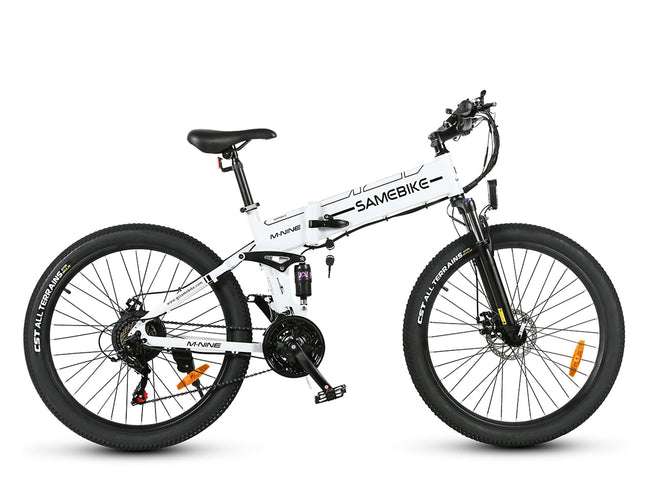
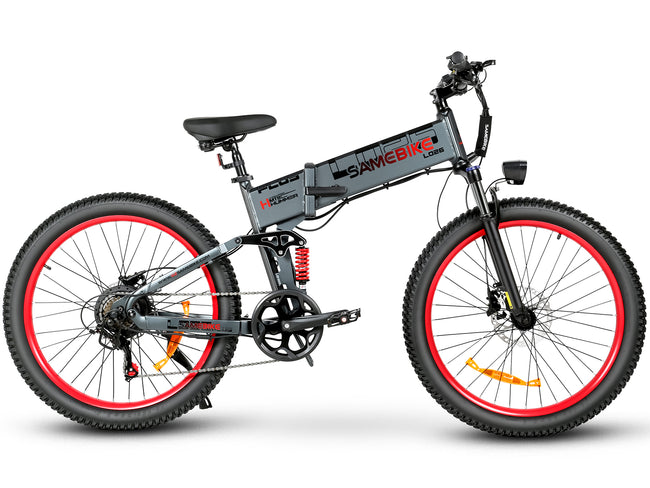
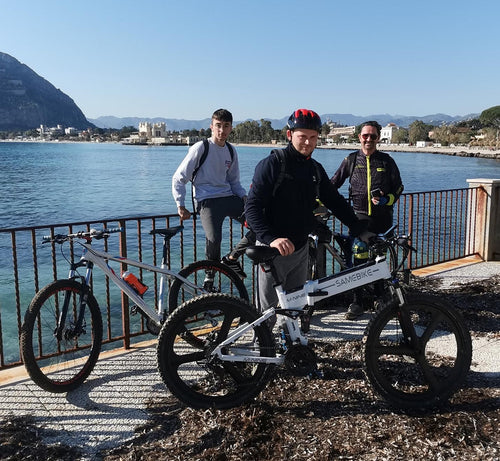
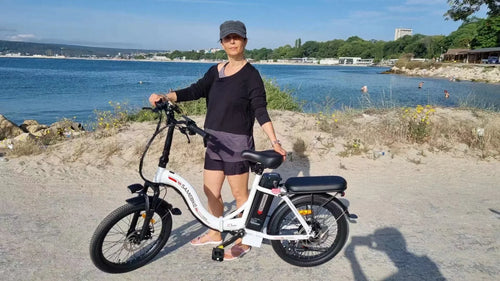
Walk into any e-bike shop and you'll see half a dozen very different-looking machines all called "e-bikes." A folding commuter and a fat-tire off-roader solve completely different problems. This guide breaks down the main e-bike types and who each one is really built for, so you can match the bike to how you actually plan to ride.
1. City / Commuter E-Bikes
What they are: Lightweight-ish, upright riding position, often with fenders, lights, and a rack built in.
Best for: People replacing a car or transit trip for their daily commute, running errands, or riding to the station. If your riding is mostly paved roads and bike lanes, this is your default category.
What to prioritize: Puncture-resistant tires, integrated lights, weather protection, and a battery with enough range for a comfortable round trip.
2. Folding E-Bikes
What they are: Compact frame that folds down for storage, often smaller wheels (16–20"), lighter batteries.
Best for: Apartment dwellers with no garage or shed, commuters who combine cycling with a train or bus leg, RV and boat owners who need something stowable, and anyone tight on storage space.
Trade-offs: Smaller wheels mean a slightly less smooth ride over rough pavement, and range is usually shorter than a full-size commuter due to a smaller battery. Great as a "last mile" bike, less great as your only bike if you're covering long distances daily.
3. Fat Tire E-Bikes
What they are: Oversized tires (typically 4"+) for extra traction and cushioning, sturdier frame, often a more aggressive or cruiser-style look.
Best for: Riders dealing with sand, snow, mud, loose gravel, or just rough neighborhood streets and potholes. Also popular with heavier riders or anyone who wants a plush, forgiving ride. Many people choose fat tire e-bikes purely for comfort and stability, not just off-road use.
What to prioritize: Tire width and tread pattern for your typical terrain, and a motor with enough torque to move the extra tire weight comfortably.
4. Off-Road / E-Mountain Bikes (eMTB)
What they are: Full or front suspension, aggressive tire tread, reinforced frame geometry built for trail impacts, mid-drive motor for torque on climbs.
Best for: Trail riders and mountain bikers who want assist on climbs without giving up descending performance.
What to prioritize: Suspension travel and quality, tire grip, and a mid-drive motor for natural power delivery on technical terrain.
5. Cargo E-Bikes
What they are: Extended frame (front-loading "bakfiets" style or rear longtail), reinforced racks, higher-torque motor to handle real weight, often wider stance for stability.
Best for: Parents doing school runs, small business owners doing local deliveries, and anyone replacing a second car for hauling groceries or kids.
What to prioritize: Braking performance (hydraulic disc brakes are worth the upgrade), a low center of gravity, and rated load capacity.
6. Road / Hybrid Fitness E-Bikes
What they are: Lighter frames, thinner tires, drop or flat-bar road geometry, minimal assist "just enough to keep pace."
Best for: Fitness riders and existing cyclists who want longer rides or faster group rides without fully giving up the workout.
What to prioritize: Overall bike weight, smooth pedal-assist tuning, and gearing suited to your typical routes.
7. Cruiser E-Bikes
What they are: Relaxed, upright seating, wide comfortable saddle, step-through frame, balloon-ish tires — built for comfort over speed.
Best for: Casual riders, beach or boardwalk towns, and anyone prioritizing an easy, low-effort ride over performance. Often a strong match for older riders or anyone getting back into cycling after time away.
What to prioritize: Step-through frame height for easy mounting, saddle comfort, and simple, intuitive controls.
Matching table
| E-bike type | Best for | Key spec to check |
|---|---|---|
| City/commuter | Daily riding, errands | Weather protection, low maintenance |
| Folding | Small storage, mixed transit commutes | Fold size, portability, range |
| Fat tire | Rough terrain, sand/snow, comfort seekers | Tire tread, motor torque |
| Off-road/eMTB | Trail and mountain riding | Suspension, tire grip |
| Cargo | Hauling kids, groceries, deliveries | Braking, load capacity, stability |
| Road/hybrid fitness | Fitness riders, longer rides | Weight, pedal-assist tuning |
| Cruiser | Comfort, casual riding, easy mounting | Step-through height, saddle comfort |
The bottom line
Pick the category that matches your terrain and daily use first — that narrows the field far more than comparing spec sheets. Once you know your type, comparing models within it becomes a much easier decision.